Funding Strategies for Non-Profit Research Organizations: Building Financial Sustainability

Financial instability is one of the leading reasons research associations struggle to fulfill their missions. A single budget shortfall can delay multi-year studies, force staff reductions, or halt publication programs entirely. The organizations that endure — and grow — are those that deliberately build diversified revenue streams rather than depending on any single source to carry the load.
Why Funding Diversification Is Critical for Research Organizations
Over-reliance on a single funding source is the most common financial risk facing non-profit research organizations. When that source contracts — whether due to federal budget cuts, a foundation shifting priorities, or an economic downturn affecting corporate sponsors — organizations without alternatives face immediate crisis.
A diversified funding strategy spreads risk across multiple channels. If federal grants represent 70% or more of your operating budget, you are not running a research organization — you are running a grant-dependent project. That distinction matters enormously when the political climate shifts or a program officer changes.
Diversification also strengthens your credibility. Foundations and major donors are more likely to invest in organizations that demonstrate they are not entirely dependent on external support. A healthy funding mix signals governance maturity and institutional resilience — both of which matter to evaluators reviewing your proposals.
The practical goal is to build a portfolio where no single source accounts for more than 40-50% of total revenue. Reaching that balance takes years, but the planning starts now.
Government and Federal Grants: A Foundation, Not a Guarantee
Federal and government grants provide substantial research funding, but they come with significant constraints that organizations must understand before building their model around them.
Public grant funding — through agencies like the National Institutes of Health, the National Science Foundation, or equivalent bodies in other countries — offers large award sizes and legitimacy. Winning a competitive federal grant signals scientific credibility. But these awards are typically restricted funds, meaning they can only be used for the specific activities outlined in the approved proposal. Overhead coverage is often capped, and the application process demands considerable staff time.
To compete effectively, research associations need a few things in place before submitting. A clear alignment between the agency's stated priorities and your organization's research agenda is non-negotiable. Reviewers can spot a proposal that has been retrofitted to match a funding announcement. Genuine alignment — where your work naturally advances the funder's goals — produces stronger applications.
Invest in grant writing capacity early. Whether that means hiring a dedicated grants manager or training existing staff, the return on that investment is significant. Organizations that treat grant writing as a core operational function — not an occasional task — consistently outperform those that scramble to meet deadlines.
One honest limitation: federal funding cycles are slow and unpredictable. Budget decisions can eliminate entire programs with little warning. Treat government grants as a foundation, but never as the ceiling of your financial strategy.
Private Foundations and Philanthropic Partnerships
Private foundations represent one of the most mission-aligned funding sources available to non-profit research organizations, but accessing them requires relationship-building that most organizations underinvest in.
The first step is identifying foundations whose stated priorities genuinely overlap with your research focus. This sounds obvious, but many associations submit proposals to foundations based on award size rather than alignment — and it shows. Foundation program officers read dozens of proposals; misalignment is immediately apparent.
Once you identify aligned foundations, the goal is to move from transactional grant-seeking to long-term philanthropic partnership. That means engaging program officers before a request for proposals is issued, sharing research findings proactively, and inviting foundation representatives to relevant events or briefings. Foundations that feel like partners — rather than ATMs — are far more likely to provide multi-year support and unrestricted funding.
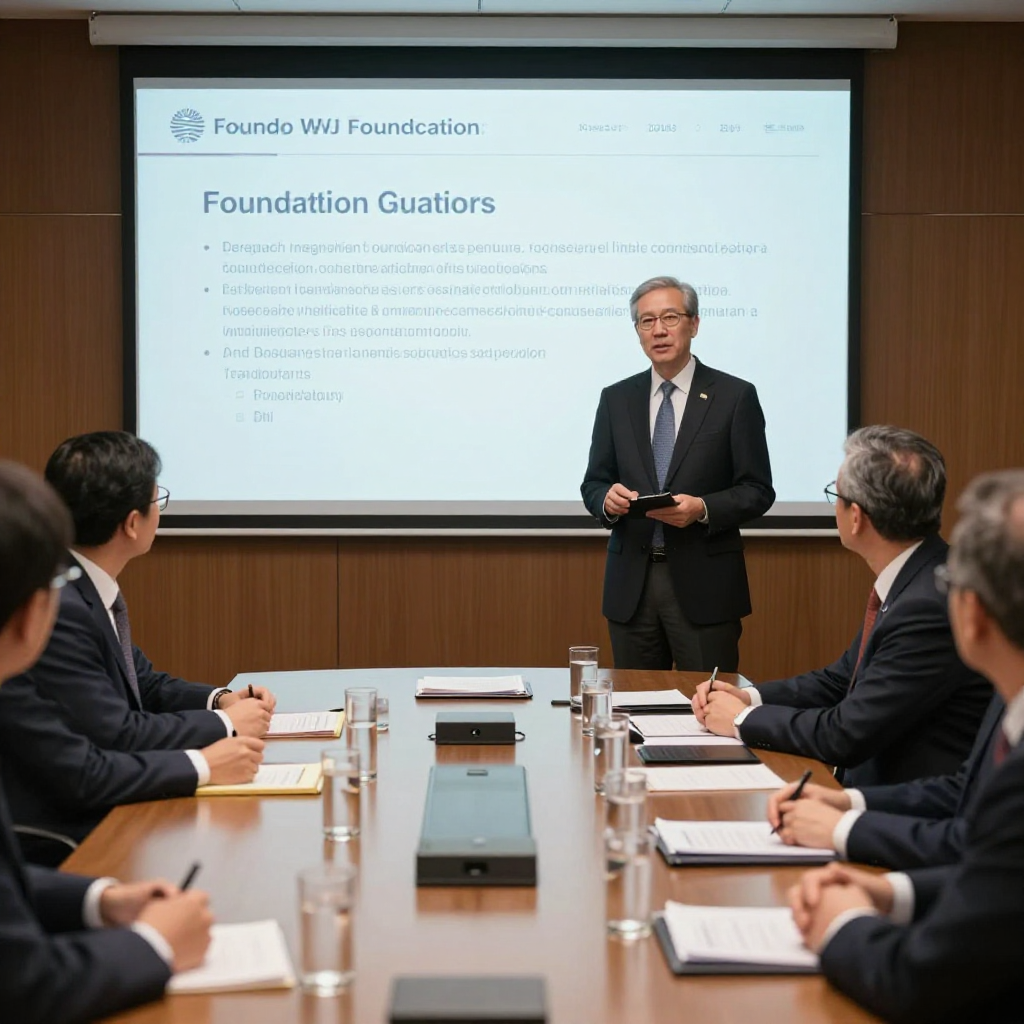
Multi-year grants are worth pursuing specifically because they enable planning. A three-year commitment from a private foundation allows you to hire staff, design longitudinal studies, and build programs that a one-year grant cannot support. When negotiating with foundations, always ask whether multi-year support is available — the worst they can say is no.
Corporate Sponsorships and Industry Collaboration
Corporate partnerships can provide flexible, significant funding — but they require careful structuring to protect your organization's scientific independence and non-profit standing.
The most sustainable corporate relationships are those where the industry partner gains genuine value from the association's research, convening power, or credibility — without directing research outcomes. A pharmaceutical company sponsoring an independent pharmacoeconomics research center is a viable model. A company funding a study and retaining editorial control over the results is not.
When structuring corporate sponsorships, define boundaries clearly in writing. Specify what the sponsor receives — visibility at conferences, access to research summaries, participation in advisory panels — and what they do not receive: influence over research design, data interpretation, or publication decisions. These boundaries protect both parties and preserve your credibility with the broader scientific community.
Industry collaboration can also take forms beyond direct sponsorship. Joint research programs, data-sharing agreements, and secondment arrangements (where company researchers work alongside your team) can generate funding-equivalent value while advancing your mission. These arrangements require governance oversight but can be highly productive when managed well.
Membership Models, Fee-for-Service, and Earned Revenue
Internal revenue-generating mechanisms reduce your dependency on external funders and give your organization financial breathing room that grants rarely provide.
Membership dues are the most straightforward earned revenue model for research associations. Members — whether individual researchers, institutions, or affiliated organizations — pay annual fees in exchange for access to publications, events, databases, or professional development resources. The key to making this model work is ensuring the membership value proposition is compelling enough that renewal rates stay high. An 80%+ annual renewal rate is a reasonable benchmark for a healthy membership program.
Fee-for-service arrangements are another underutilized option. Research associations often possess specialized expertise — in systematic review methodology, data analysis, policy translation, or training — that other organizations will pay for. Offering these services on a contract basis generates unrestricted revenue that can be directed wherever the organization needs it most.
Conference registration fees, publication licensing, and online course sales also contribute to earned revenue. None of these will replace grants or major gifts, but together they can realistically represent 20-30% of operating revenue for a mid-sized research association — a meaningful buffer against external funding volatility.
Building an Endowment and Planning for Long-Term Sustainability
An endowment fund provides a permanent financial cushion by generating investment income that supports operations in perpetuity. For most research associations, building an endowment is a long-term goal — but the planning should start early.
The basic mechanism is straightforward: donors contribute to a permanent fund, the principal is invested, and the organization draws a sustainable annual distribution — typically 4-5% of the fund's market value. A $2 million endowment generating 4.5% annually produces $90,000 in unrestricted support each year, without touching the principal.
Starting an endowment requires a board commitment and a clear case for why permanent capital matters to your mission. The most effective endowment campaigns are tied to specific, resonant purposes — a named research fund, a fellowship program, or a core operating reserve. Donors respond to permanence and legacy.
Board engagement is critical here. Trustees who make their own endowment gifts signal to prospective donors that leadership has skin in the game. A board that has not contributed to the endowment will find it difficult to ask others to do so. Governance and fundraising are not separate functions — they are deeply intertwined, especially at this level of giving.
Creating a Cohesive Funding Strategy and Annual Review Process
A cohesive fundraising strategy integrates all revenue streams into a single, managed portfolio — with clear goals, assigned responsibilities, and a regular review cycle.
Start by mapping your current revenue by source and calculating what percentage each channel contributes. This baseline reveals your actual risk exposure. If you have never done this exercise, the results are often sobering — and clarifying.
From there, set targets for each channel over a three-year horizon. Which sources can realistically grow? Where are you underinvesting? What new revenue streams align with your capacity and mission? These questions should drive an annual strategic funding review, conducted by senior leadership and the board's finance or development committee.
The review process should also assess alignment between your funding narrative and your research identity. Every funder — whether a federal agency, a foundation, or a corporate sponsor — needs to understand why your organization exists and why your work matters. That narrative should be consistent, compelling, and updated as your research portfolio evolves.
Adaptive planning matters as much as the plan itself. Funding landscapes shift. A strategy that was optimal three years ago may not be today. Build in flexibility, maintain a pipeline of prospective funders, and resist the temptation to coast when times are good. The organizations that build genuine financial sustainability are those that treat funding strategy as an ongoing discipline — not a crisis response.
Frequently Asked Questions
What percentage of funding should a non-profit research organization seek from grants?
No single source, including grants, should exceed 40-50% of total revenue. Many advisors suggest targeting a mix where government grants represent no more than 30-40%, with the remainder spread across foundations, earned revenue, and individual giving. The right balance depends on your organization's size, mission, and capacity.
How can a small research association compete for major foundation grants?
Small associations compete most effectively by demonstrating deep expertise in a specific niche, showing evidence of past impact, and building genuine relationships with program officers before submitting proposals. Partnering with larger institutions on collaborative grants is another practical path — it expands your credibility while maintaining your organizational identity.
What is the difference between restricted and unrestricted funding?
Restricted funding must be used for a specific purpose defined by the donor or funder — a particular study, program, or time period. Unrestricted funding can be directed wherever the organization needs it most, including overhead, staff development, or strategic initiatives. Unrestricted dollars are generally more valuable operationally, which is why earned revenue and endowment income are so important.
How do membership dues work as a revenue stream for research associations?
Members pay annual fees in exchange for defined benefits — access to research publications, conference discounts, professional development resources, or participation in working groups. Revenue is predictable and recurring, which makes it easier to budget. The model works best when the value proposition is clear and members renew at high rates year over year.
When should a non-profit research organization start building an endowment?
Ideally, endowment planning begins once the organization has established a stable operating base and a donor community with capacity for larger gifts. There is no minimum size threshold, but organizations that wait until they are in financial difficulty will find it much harder to make the case for permanent capital. Starting small — even with a $50,000 seed fund — establishes the structure and signals long-term commitment to donors.